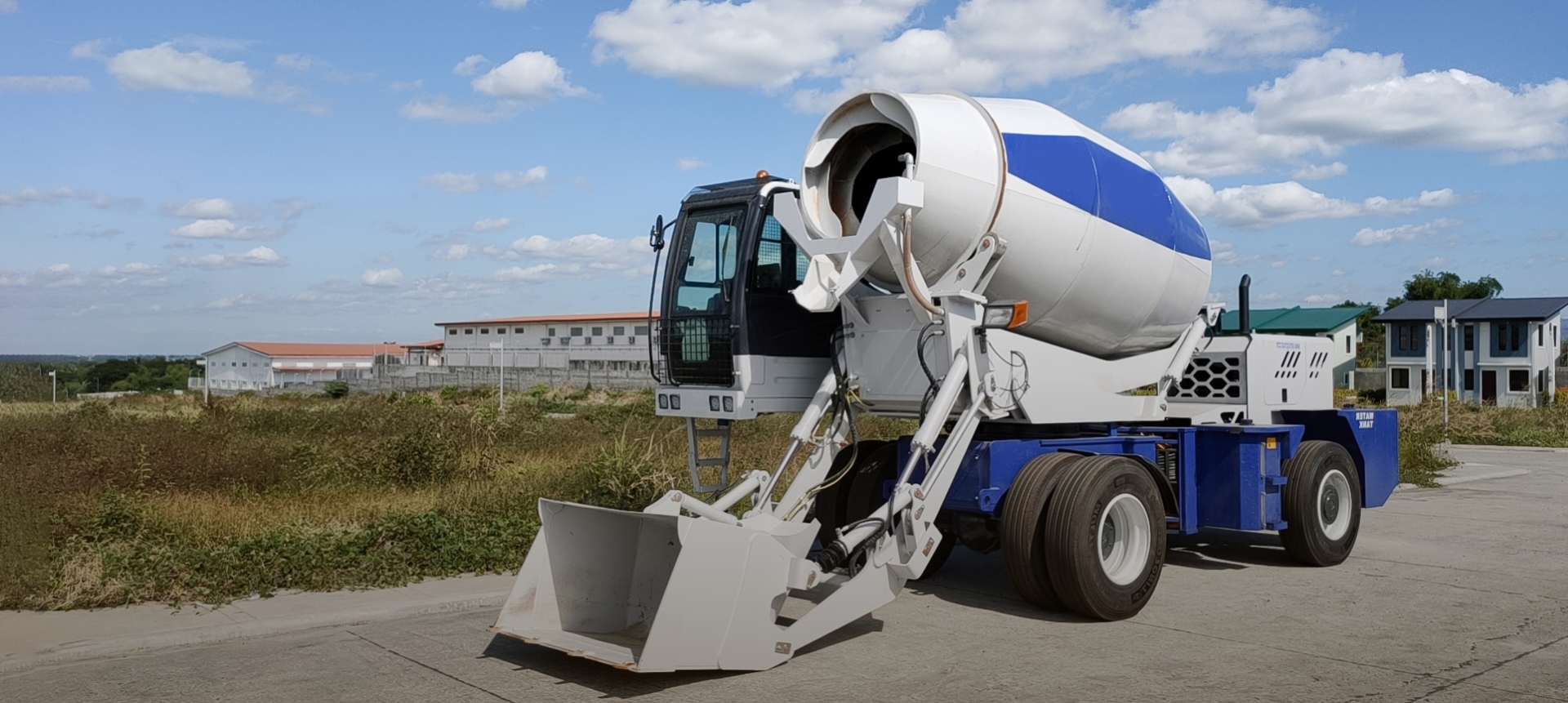
On many Ghana construction sites, concrete productivity is not determined only by how much concrete a machine can mix in an hour. The speed at which that concrete can be discharged also matters. A self loading concrete mixer machine combines loading, batching, mixing, transportation, and discharge functions, allowing contractors to produce and place concrete with fewer interruptions between stages. When discharge is quick and controlled, the machine spends less time waiting at the placement point and can return to production sooner. This creates a faster working cycle, which is particularly valuable for projects where concrete demand is continuous and site conditions make conventional concrete transportation difficult. For Ghanaian contractors, this distinction is important. Construction sites can vary considerably in accessibility, available labor, material supply arrangements, and distance from ready-mix facilities. A machine that completes each concrete cycle efficiently can therefore contribute more to overall project output than one evaluated solely by its nominal mixing capacity. Faster discharge turns equipment utilization into completed construction work.
How Discharge Speed Affects the Working Cycle of a Self Loading Mixer Machine
The Concrete Cycle Does Not End When Mixing Is Finished
A common mistake when evaluating concrete equipment is to focus heavily on mixing capacity while overlooking what happens afterward. Producing concrete is only one part of the construction cycle. The machine must still reach the placement point, discharge the concrete, and return for another batch. Consider a simplified cycle consisting of loading, mixing, transportation, discharge, and return. If loading and mixing are efficient but discharge takes unnecessarily long, the entire cycle becomes elongated. The machine remains occupied while no additional concrete is being produced. A self loading mixer machine is designed to integrate several operations into one mobile unit. Its productivity therefore depends on the efficiency of the entire cycle rather than one isolated function.
Faster Discharge Shortens the Time Between Concrete Batches
When discharge is completed quickly, the machine can return to the loading area sooner and begin the next cycle. Over the course of a working day, even small reductions in discharge time can accumulate into a meaningful increase in completed cycles. For example, if a machine performs numerous delivery cycles during a shift, saving several minutes during each discharge operation can create additional productive time. That time can translate into more concrete delivered to foundations, columns, slabs, drainage structures, or other construction elements. The principle is simple: **less waiting at the discharge point means more time spent producing and delivering concrete.**
Cycle Efficiency Matters More Than Isolated Speed
A high-performance self loading concrete mixer for sale in Ghana should therefore be evaluated through its complete operating rhythm. Fast mixing alone does not guarantee high daily output. The loading mechanism, travel conditions, discharge arrangement, operator control, and return cycle all contribute to actual productivity. This is why discharge speed deserves a more prominent position when contractors assess concrete equipment.
Why Faster Concrete Discharge Matters on Ghana Construction Sites
Reducing Waiting Time in Labor-Intensive Construction
Construction productivity depends on coordination between equipment, workers, and construction sequences. When concrete delivery is delayed, workers responsible for reinforcement, formwork, finishing, or placement may have to wait. Such interruptions can create a domino effect. A delayed concrete delivery can affect several subsequent activities, particularly when crews are scheduled around a specific pouring operation. A self loading mixer machine can reduce this dependency by producing and transporting concrete directly to the required location. Faster discharge further compresses the final stage of the cycle, helping workers receive concrete when they need it.
Supporting Projects Away From Conventional Ready-Mix Supply
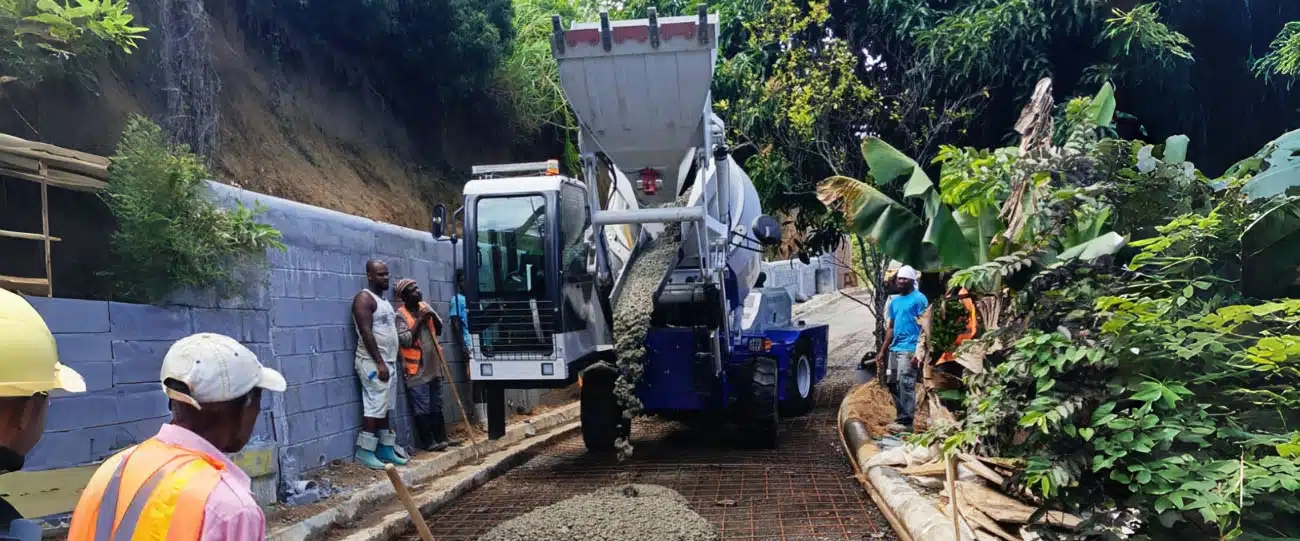
Not every Ghana construction project is located within convenient reach of a commercial ready-mix plant. Projects in developing areas, peripheral communities, rural locations, and sites with difficult access may face longer transportation distances. In these conditions, a self loading mini concrete mixer machine provides an alternative approach: produce concrete closer to the point of use. The machine can load aggregates, mix the required concrete, travel to the placement area, and discharge the material without depending on a separate fleet of mixer trucks. Faster discharge strengthens this advantage because the machine can complete its delivery cycle and return for the next batch more quickly.
Improving Productivity Where Access Conditions Are Challenging
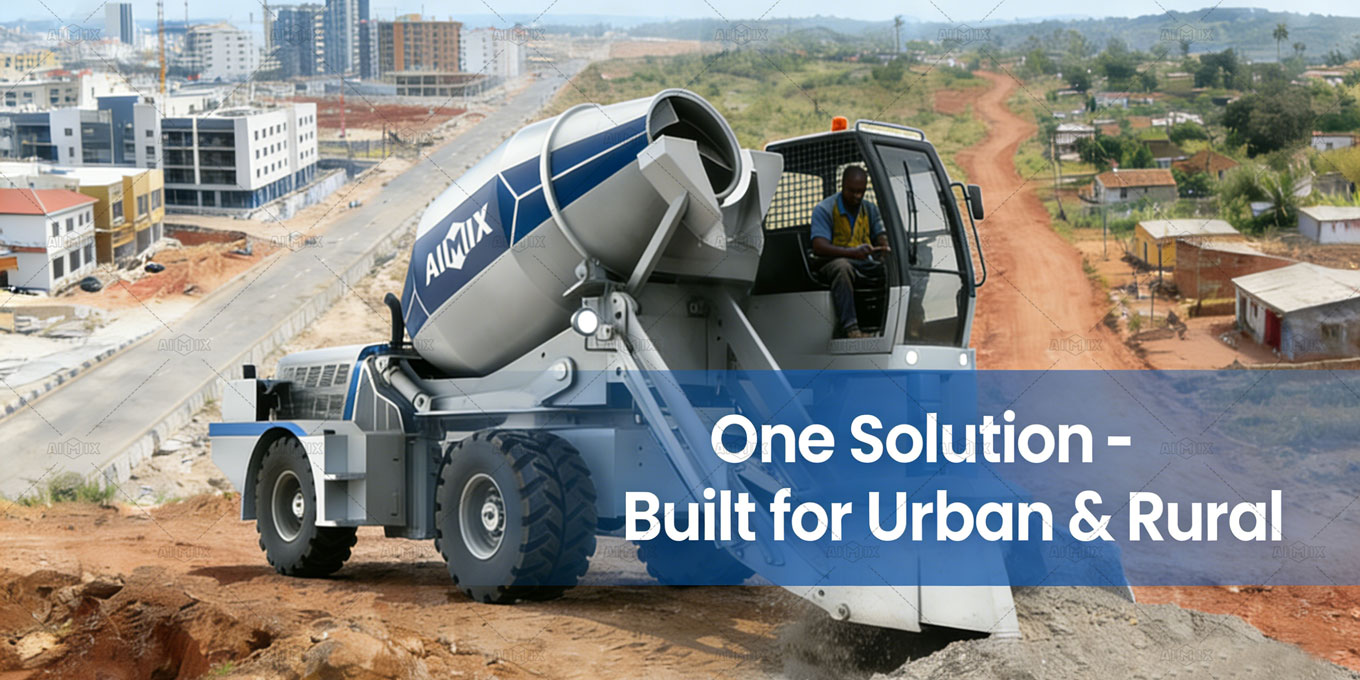
Ghanaian construction projects may involve narrow access roads, uneven terrain, congested urban areas, or changing site layouts. A mobile concrete production unit can be valuable because it combines several functions in a single machine. Once the machine reaches the required placement area, discharge flexibility becomes especially important. Concrete may need to be delivered beside a foundation, into a trench, along a wall, or within another restricted working zone.
Controlled Discharge Helps Match the Construction Sequence
Fast does not mean uncontrolled. The most useful discharge system is one that provides both speed and precision. Operators need to regulate the concrete flow according to the receiving location and the pace of the workers. Controlled discharge can reduce unnecessary spillage and help maintain a steady supply during placement.
How Contractors Can Maximize the Productivity of a Self Loading Mixer Machine
Prepare the Discharge Area Before the Machine Arrives
The discharge process begins before the mixer reaches the pouring point. Access should be cleared, workers should be ready, and the receiving area should be properly prepared. If the machine arrives but workers are still preparing formwork or reinforcement, faster discharge will not automatically increase productivity. The entire construction sequence must be synchronized. A well-organized discharge area allows the self loading mixer machine to position itself quickly, discharge continuously, and leave without unnecessary maneuvering.
Choose the Right Discharge Configuration for the Project
Different construction applications require different discharge arrangements. Foundations may require discharge into a relatively concentrated area, while trenches, slabs, and extended structures may require more controlled material distribution. Contractors should consider discharge reach, outlet positioning, maneuverability, and operator visibility when selecting equipment.
Match Machine Productivity With Actual Concrete Demand
Equipment should also be matched to project scale. A machine with a suitable mixing capacity and efficient discharge system can maintain a practical balance between production and placement. If the machine produces concrete faster than workers can place it, additional output may not create additional productivity. Conversely, if the discharge process is too slow, the machine becomes a bottleneck. The objective is therefore not simply maximum discharge speed. It is **synchronized concrete flow**.
Measure Productivity by Completed Work
For contractors, the most meaningful performance indicator is ultimately not the theoretical machine specification. It is how much construction work can actually be completed during a working day. A self loading large concrete mixer for sale that reduces waiting, shortens concrete delivery cycles, and keeps crews supplied can have a direct effect on project progress. This is particularly relevant for Ghana construction projects where controlling labor utilization, equipment deployment, transportation costs, and construction schedules can have a significant influence on project economics. The advantage of faster discharge becomes cumulative. One efficient cycle leads to another, and another. Over weeks of construction, those incremental gains can become a substantial difference in completed foundations, slabs, drainage works, columns, roads, and other concrete structures. Ultimately, the value of a self loading mixer machine on Ghana construction sites should not be judged only by its ability to mix concrete. Its real productivity emerges from the entire operating cycle, and discharge is a critical part of that equation. Faster and better-controlled discharge reduces idle time, accelerates concrete placement, and allows the machine to return to production sooner. When every cycle is optimized, more concrete reaches the construction point and more physical work gets completed within the same working period.