Before ordering a rubber tyred gantry crane (RTG), the buyer should prepare a complete site data package covering load requirements, container or cargo dimensions, yard layout, travel routes, ground conditions, operating environment, power supply, lifting height, required clearances, and operating cycle. These details determine the RTG’s rated capacity, span, lifting height, leg configuration, steering system, power system, wheel arrangement, and safety functions. Missing or inaccurate site data can lead to an unsuitable crane design, unnecessary cost, or installation and operation problems.
A useful site data checklist before ordering a rubber tyred gantry crane should therefore be completed before requesting a final technical quotation. The following information gives the crane manufacturer the engineering data needed to evaluate whether the proposed RTG configuration will work in the actual yard.
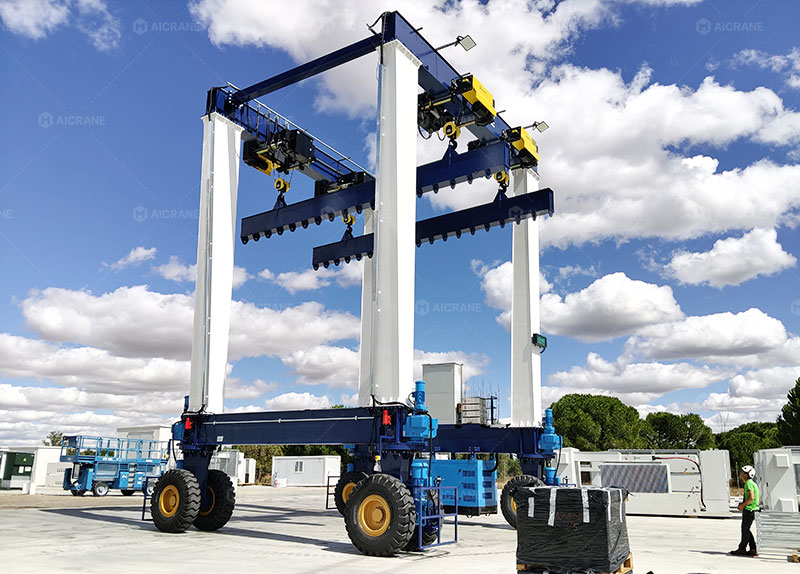
1. What Load Information Should Be Provided?
The first item is the load that the RTG must lift and move.
Record:
- Maximum rated load
- Typical operating load
- Container or cargo type
- Load distribution
- Lifting attachment or spreader type
- Whether loads are handled individually or in specific configurations
- Required safety or design factors specified by the applicable standards
For container handling, specify the container sizes that the crane must handle, such as 20 ft, 40 ft, or 45 ft containers. If the RTG will handle non-containerized loads, provide the actual dimensions, weight, center of gravity, and lifting points.
Do not select crane capacity based only on the heaviest object that might theoretically appear in the yard. The manufacturer needs to know the maximum lifted load under the intended operating configuration, including the weight of the spreader or other lifting device where applicable.
For example, an RTG intended to handle containers may have a different rated capacity requirement from an RTG used to lift steel products or other concentrated loads. The lifting attachment can also affect the required capacity and headroom.
2. What Yard Layout Data Does the Manufacturer Need?
The RTG must physically fit the working area. Provide an accurate site layout showing:
- Yard block dimensions
- Crane travel lanes
- Storage rows
- Container or cargo positions
- Existing buildings
- Roads and intersections
- Drainage channels
- Columns, walls, fences, and other obstructions
- Loading and unloading areas
- Clearance from nearby equipment
- Any restricted-access areas
The most important dimensional information includes the required span, the number of storage rows the RTG must cover, and the available travel distance.
For a container yard, indicate how many container rows must fit beneath the container handling crane. The required RTG span depends on the storage arrangement, container width, operating clearances, and the required clearance between the crane legs and stored containers.
A site drawing with actual dimensions is much more useful than simply stating that the crane is required for a “six-row yard.”
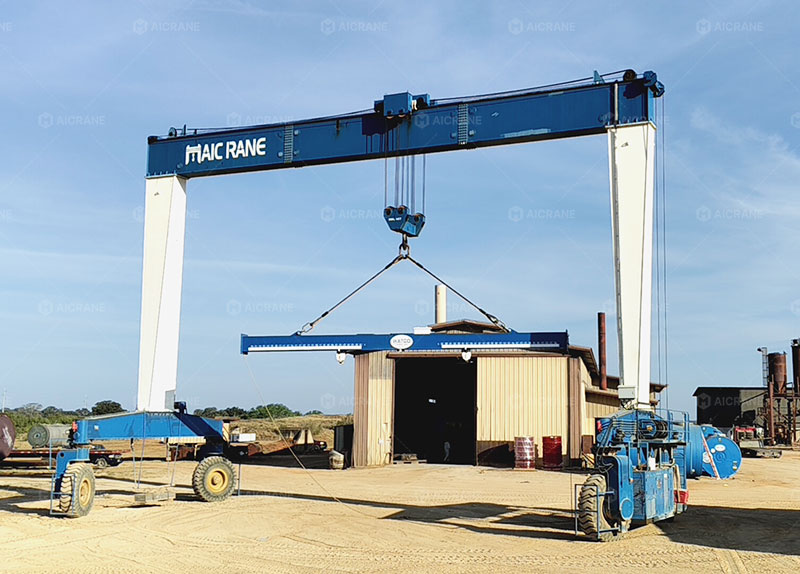
3. How Should RTG Span Be Determined?
RTG span should be based on the actual distance the crane legs need to cover rather than a standard catalog size.
Confirm:
- Number of container or cargo rows.
- Container width or cargo footprint.
- Required operating clearance.
- Clearance between crane legs and stored loads.
- Ground-level traffic requirements.
- Any future expansion requirements.
For example, if the crane needs to cover multiple container rows plus a truck lane, the required span may be substantially different from the span needed for the storage rows alone.
The final span should be determined from the site layout and handling arrangement. Avoid ordering an RTG based only on a competitor’s or previous project’s span because similar storage capacities can have different dimensional requirements.
4. What Lifting Height and Clearance Information Is Required?
Specify the required lifting height using the actual stacking arrangement.
For container yards, provide:
- Number of containers stacked vertically
- Container height
- Required clearance above the highest container
- Spreader lifting range
- Required hook or spreader height
- Obstructions above the yard
- Required clearance for maintenance
A statement such as “five-high stacking” is useful, but it may not be sufficient for final engineering. The manufacturer should understand the actual container dimensions and required clearance.
Also check the relationship between lifting height and overall RTG height. Increasing lifting height can affect the crane’s structural dimensions and operating requirements.
If the yard contains overhead structures, lighting systems, power lines, pipelines, or other installations, their elevations should be included in the site drawing.
5. What Ground and Pavement Data Should Be Collected?
Ground conditions are especially important for a rubber tyred gantry crane because the machine transfers its weight and operating loads through its wheels to the yard surface.
Provide available information about:
- Pavement type
- Concrete or asphalt construction
- Pavement thickness
- Subgrade conditions
- Ground bearing capacity
- Surface flatness
- Drainage
- Maximum allowable wheel loads, if specified
- Existing pavement limitations
The manufacturer needs to check the relationship between the RTG’s wheel loads and the site’s pavement or foundation design.
Do not assume that a surface suitable for trucks is automatically suitable for an RTG mobile gantry crane. A large RTG concentrates substantial loads through its wheels, and repeated travel can create different pavement requirements from ordinary road traffic.
If geotechnical or pavement reports are available, include them in the RFQ package.
6. What Travel and Steering Information Should Be Specified?
An RTG needs sufficient space to travel, turn, and align with its operating lanes.
Confirm:
- Straight travel distance
- Required turning areas
- Travel lane width
- Cross-traffic areas
- Yard intersections
- Required steering modes
- Maximum site gradients
- Any uneven or difficult sections
Standard RTG configurations are generally intended for controlled yard travel. If the crane must frequently change direction or move between different blocks, explain the actual operating pattern.
Steering requirements should not be treated as a minor detail. Depending on the RTG configuration, steering systems may support different operating modes, and the required mode should match the yard layout.
7. What Power Supply Information Is Needed?
The power configuration should be decided according to the site’s operating conditions.
Provide:
- Available electrical supply, if applicable
- Voltage
- Frequency
- Number of phases
- Available connection capacity
- Cable-reel requirements
- Generator requirements
- Expected operating hours
- Fuel or charging considerations for the selected power system
RTGs can be configured with different power arrangements depending on the application, including diesel-generator systems, cable-reel systems, or battery-based configurations.
The buyer should therefore specify whether the crane must operate independently of fixed electrical infrastructure or whether the yard has a suitable power connection.
If an electrical system is required, provide the actual site power parameters rather than simply stating “standard industrial power.”
8. What Operating Environment Data Should Be Included?
Environmental conditions can affect the crane’s mechanical, electrical, and control-system configuration.
Include:
- Minimum and maximum ambient temperature
- Rainfall and humidity conditions
- Wind conditions
- Dust exposure
- Corrosive or coastal environment
- Snow or ice conditions where applicable
- Elevation above sea level
- Outdoor operating conditions
- Applicable local environmental requirements
Temperature is particularly important when the RTG will operate in very cold or very hot regions. Components, lubricants, electrical systems, batteries, engines, and control equipment may require different configurations depending on the environmental range.
For coastal yards, salt exposure should also be identified because corrosion protection requirements can differ from those for an inland facility.
9. What Production and Operating Data Should Be Provided?
The RTG should be selected according to how frequently it will operate, not just what it can lift.
Provide:
- Operating hours per day
- Operating days per week
- Expected annual operating period
- Number of lifts per hour or required handling rate
- Average travel distance per cycle
- Typical lifting height
- Typical load
- Peak operating periods
- Number of shifts
This information helps determine the appropriate duty classification and equipment configuration.
For example, an RTG used occasionally for internal material handling may have very different operating requirements from one working continuously in a high-throughput container yard.
If future throughput is expected to increase, state the expected operating target rather than designing only for the current workload.
10. What Site Safety Information Should Be Checked?
Before ordering, identify site-specific safety requirements.
Check for:
- Personnel access routes
- Pedestrian areas
- Truck traffic
- Restricted zones
- Emergency access
- Fire-protection requirements
- Collision risks
- Wind protection requirements
- Emergency stop requirements
- Lighting requirements
- Operator visibility
- Local regulations and applicable crane standards
The manufacturer should also know whether the RTG will operate in an area shared with trucks, terminal tractors, forklifts, or other mobile equipment.
Traffic separation can influence the required crane travel arrangement, warning systems, visibility equipment, and operating procedures.
11. What Information Should Be Included in the RFQ Drawing?
A dimensioned site drawing is one of the most useful documents in an RTG purchasing package.
Ideally, the drawing should show:
- Overall yard dimensions
- Crane operating area
- Required span
- Storage rows
- Travel lanes
- Maximum stacking height
- Existing structures
- Obstructions
- Ground elevations
- Pavement information
- Drainage
- Power infrastructure
- Truck routes
- Maintenance areas
Aerial images can be useful as supplementary information, but they should not replace a dimensioned engineering drawing.
If the final site has not yet been constructed, provide the preliminary layout and clearly identify which dimensions are fixed and which may change.
12. What Should Be Confirmed Before Finalizing the Order?
Before signing the technical specification, review the site data with the RTG supplier and confirm that the proposed crane matches the actual operating environment.
The final checklist should confirm:
- Rated capacity
- Spreader or lifting attachment
- Span
- Lifting height
- Overall dimensions
- Number and arrangement of wheels
- Steering configuration
- Travel speed requirements
- Power system
- Operating duty
- Wind conditions
- Temperature range
- Ground conditions
- Required clearances
- Safety systems
- Applicable standards
- Delivery and assembly conditions
- Maintenance access
- Future operating requirements
Any assumptions made by the manufacturer should be documented. This is particularly important when some site information is unavailable during the quotation stage.
Common Site Data Mistakes to Avoid
Several mistakes can create problems during RTG selection.
Using only the maximum load: Capacity alone does not define the required RTG configuration.
Providing nominal yard dimensions: Small dimensional differences can affect span, clearance, and travel arrangements.
Ignoring pavement conditions: Wheel loads should be considered during site planning.
Leaving power requirements until later: The selected power system can affect infrastructure and operating costs.
Not identifying obstructions: Lighting poles, buildings, drainage systems, and other structures can interfere with crane travel.
Designing only for today’s operation: Future stacking height, throughput, or yard expansion may justify changes to the initial specification.
Treating manufacturer specifications as universal: RTG capacity, span, lifting height, travel performance, wheel loads, steering functions, and power configurations vary by gantry crane design and project requirements.
Site Data Checklist: What Should You Send the RTG Manufacturer?
A practical RFQ package can contain the following:
- Maximum and typical load
- Cargo/container dimensions
- Spreader or lifting attachment requirements
- Number of storage rows
- Required crane span
- Maximum stacking height
- Required lifting height
- Crane travel distance
- Travel and turning requirements
- Pavement and ground data
- Site gradients
- Ambient temperature range
- Wind and environmental conditions
- Power supply information
- Required operating hours and handling rate
- Site layout drawing
- Existing structures and obstructions
- Traffic and pedestrian routes
- Applicable local regulations and standards
- Future expansion requirements
The more complete this information is, the easier it is for the manufacturer to develop a technically appropriate RTG configuration and identify site-related constraints before fabrication.
Key Takeaways
A site data checklist before ordering a rubber tyred gantry crane should cover much more than lifting capacity. The critical inputs are load, span, lifting height, yard layout, pavement and ground conditions, travel routes, power supply, environmental conditions, operating cycle, safety requirements, and site clearances.
The most important principle is to specify the RTG around the actual yard operation. Storage rows determine span, stacking requirements influence lifting height, pavement conditions affect wheel-load considerations, operating cycles influence duty requirements, and site infrastructure determines the appropriate power and travel configuration.
Providing a dimensioned site layout, operating data, and ground information with the RFQ allows the supplier to identify engineering constraints early and reduces the risk of changes after the RTG design has been finalized.