A 20-ton mobile gantry crane is a highly versatile lifting solution used in workshops, warehouses, steel fabrication plants, equipment maintenance facilities, and manufacturing operations. Compared with fixed overhead cranes, mobile gantry cranes offer greater flexibility because they can be moved to different workstations and used in areas where permanent crane systems are not practical.
However, before introducing a 20-ton mobile gantry crane into a workshop, one critical question must be answered:
Can your workshop floor safely support the crane and its load?
Many companies focus heavily on crane specifications such as lifting capacity, span, lifting height, and mobility, while overlooking floor load-bearing capability. An inadequate workshop floor can lead to serious problems including concrete cracking, uneven crane movement, wheel sinking, structural damage, safety hazards, and even crane instability.
Understanding how floor conditions affect mobile gantry crane performance is essential for ensuring safe and reliable operation.
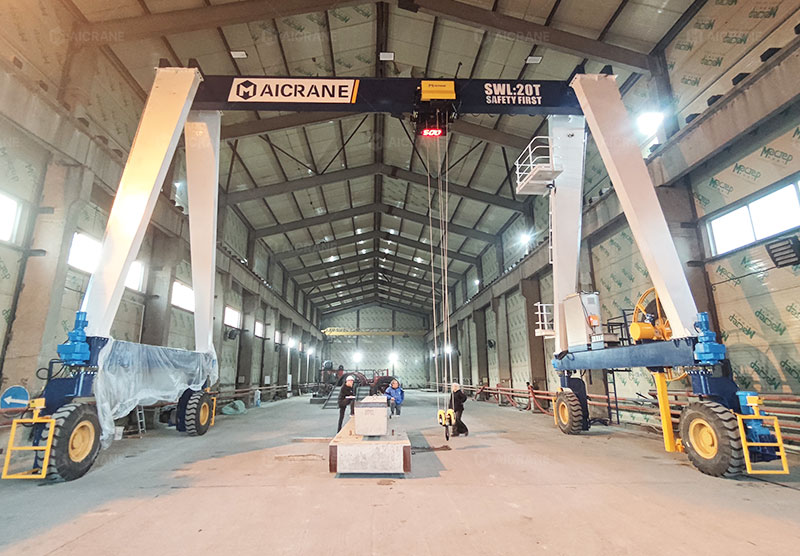
Why Floor Strength Matters for Mobile Gantry Cranes
Unlike rail-mounted gantry cranes that distribute loads through fixed runway systems, mobile gantry cranes transfer all operational forces directly onto the workshop floor through their wheels or casters.
This means the floor must withstand:
- The crane’s self-weight
- The lifted load
- Dynamic movement forces
- Wheel point loading
- Turning and braking stresses
- Uneven load distribution
A 20 ton gantry crane lifting near full capacity can place extremely high concentrated loads on relatively small wheel contact areas.
Even if a workshop floor appears visually strong, it may not have been designed for heavy industrial lifting equipment.
Common Problems Caused by Weak Floors
If the floor cannot properly support the crane, several issues may occur:
- Floor cracking
- Surface spalling
- Wheel rutting
- Uneven crane travel
- Premature caster wear
- Structural settlement
- Reduced crane stability
- Increased risk of tipping
Over time, these issues can result in expensive repairs, operational downtime, and major safety risks.
Understanding Total Load on the Floor
Many operators assume that a “20-ton crane” only applies 20 tons of pressure to the floor. In reality, the actual floor load is significantly higher because the total force includes both the lifted load and the crane’s own structural weight.
Typical Weight Components
A mobile gantry crane may include:
- Main girder
- Support legs
- Trolley
- Hoist
- Motors
- Electrical systems
- Wheels or casters
Depending on the crane design, a 20-ton mobile gantry crane itself may weigh anywhere from several tons to over 20 tons.
When lifting a full-rated load, the floor may need to support:
- Crane self-weight
- 20-ton lifted load
- Dynamic impact forces
This combined load is then concentrated onto only a few wheel contact points.
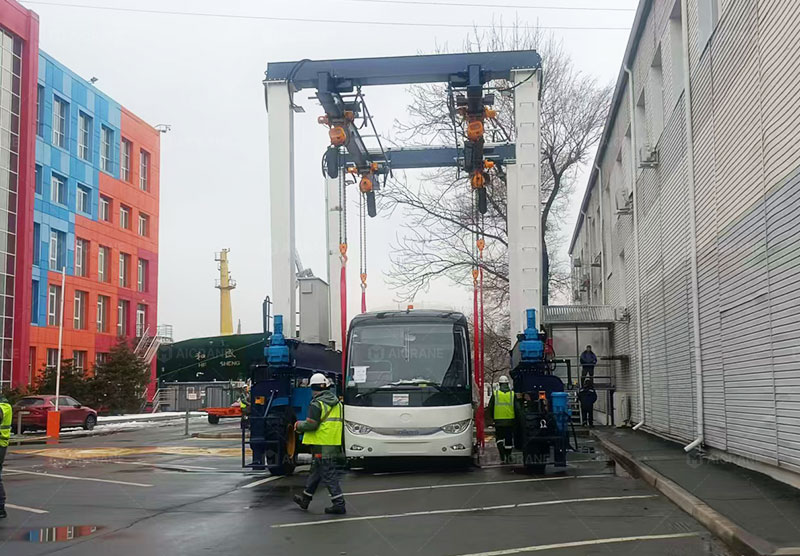
Wheel Load Distribution Is Critical
One of the most important factors in floor evaluation is wheel load distribution.
Even when total crane weight appears manageable, wheel point loading can become extremely high.
Example of Concentrated Wheel Loads
Suppose a mobile rubber tyred gantry crane uses four wheels:
- Total loaded system weight = 32 tons
- Weight distribution may not be perfectly equal
- One wheel could temporarily carry significantly more load during movement or uneven lifting
This creates concentrated pressure on the concrete floor.
In some cases, wheel loads can exceed the floor’s design limits even when the overall floor area appears large enough.
Dynamic Loading During Crane Movement
When the crane starts, stops, or changes direction, dynamic forces increase wheel loading further.
Additional stress may result from:
- Sudden acceleration
- Uneven floor surfaces
- Load swinging
- Emergency braking
- Turning movements
These operational conditions make floor analysis even more important for mobile gantry crane applications.
Concrete Thickness and Reinforcement Requirements
Workshop floors designed for light industrial use may not be suitable for heavy mobile gantry crane operations.
Several floor characteristics determine whether the slab can safely support the crane.
Concrete Thickness
Thicker concrete slabs generally provide better load-bearing capability.
Light-duty workshop floors may only use:
- 100 mm to 150 mm concrete thickness
Heavy industrial gantry crane applications often require:
- 200 mm to 300 mm reinforced concrete slabs
- Additional localized reinforcement
However, thickness alone is not enough.
Reinforcement Design
The internal reinforcement structure is equally important.
Factors include:
- Rebar size
- Rebar spacing
- Reinforcement depth
- Steel mesh quality
- Concrete strength grade
Poor reinforcement can allow cracking even if the slab appears thick enough.
Subgrade Stability
The soil or foundation beneath the concrete also plays a major role.
Weak subgrade conditions can cause:
- Differential settlement
- Concrete deformation
- Uneven floor elevation
- Long-term structural instability
Even a strong concrete slab can fail if the underlying foundation is inadequate.
Floor Flatness and Surface Condition
Mobile gantry cranes require smooth and level floor surfaces for safe operation.
Uneven workshop floors can create several operational problems:
- Uneven wheel loading
- Increased rolling resistance
- Crane skewing
- Load sway
- Wheel wear
- Structural twisting
Surface Damage Increases Risks
Existing floor damage such as:
- Cracks
- Expansion joint deterioration
- Surface delamination
- Potholes
- Oil-damaged concrete
can worsen under repeated heavy wheel loading.
Small defects may rapidly expand once heavy cranes begin traveling across the surface daily.
Indoor vs Outdoor Mobile Gantry Crane Applications
Floor evaluation becomes even more important when cranes operate both indoors and outdoors.
Outdoor Surface Challenges
Outdoor work areas may involve:
- Asphalt surfaces
- Gravel
- Compacted soil
- Mixed pavement conditions
Many outdoor surfaces cannot safely support a 20-ton mobile gantry crane under full load.
Asphalt, for example, may soften under high temperatures and deform under concentrated wheel pressure.
Weather Effects
Environmental conditions can also affect floor performance:
- Rainwater infiltration
- Freeze-thaw cycles
- Ground erosion
- Moisture weakening
For outdoor applications, reinforced concrete travel paths are often necessary.
Importance of Professional Floor Load Analysis
One of the biggest mistakes companies make is estimating floor capability visually instead of conducting proper engineering analysis.
A professional floor assessment should evaluate:
- Concrete thickness
- Reinforcement details
- Concrete compressive strength
- Soil bearing capacity
- Wheel load calculations
- Dynamic loading factors
- Travel routes
- Expansion joints
- Existing structural damage
Structural engineers may use:
- Core sampling
- Ground penetrating radar
- Load calculations
- Finite element analysis
- Non-destructive testing
These evaluations help determine whether:
- The existing floor is sufficient
- Reinforcement upgrades are needed
- Crane operating restrictions are necessary
How Crane Design Affects Floor Pressure
Not all 20-ton mobile gantry cranes apply the same floor loading.
Certain crane design features can reduce floor pressure significantly.
Larger Wheel Diameter
Larger wheels help:
- Spread load more evenly
- Reduce point pressure
- Improve mobility
- Minimize floor damage
Additional Wheels
Using more wheels distributes weight across a larger surface area.
For example:
- 8-wheel configurations generally reduce individual wheel loads compared with 4-wheel systems
Polyurethane vs Steel Wheels
Wheel material also affects floor interaction.
Polyurethane wheels:
- Reduce surface damage
- Lower rolling noise
- Improve floor protection
Steel wheels:
- Handle heavier loads
- Offer better durability
- Create higher localized pressure
Selecting the proper wheel system is essential for balancing load capacity and floor protection.
Signs Your Workshop Floor May Need Reinforcement
Several warning signs may indicate the floor is not suitable for heavy mobile gantry crane operation.
These include:
- Existing concrete cracking
- Uneven slab settlement
- Frequent floor repairs
- Visible wheel rutting
- Weak expansion joints
- Thin concrete construction
- Hollow sounding concrete areas
- Vibration during heavy equipment movement
Ignoring these warning signs can lead to progressive floor deterioration after crane installation.
Common Floor Reinforcement Solutions
If the workshop floor cannot adequately support the crane, several reinforcement options may be available.
Concrete Overlay Reinforcement
Additional reinforced concrete layers can increase slab strength and thickness.
Steel Load Distribution Plates
Steel plates may be installed along crane travel paths to distribute wheel loads more evenly.
Dedicated Crane Travel Lanes
Some facilities construct reinforced crane pathways specifically designed for mobile gantry crane operation.
Foundation Upgrades
In severe cases, subgrade stabilization or complete floor replacement may be necessary.
The best solution depends on:
- Crane duty cycle
- Operating frequency
- Wheel configuration
- Existing floor condition
- Future expansion plans
Long-Term Benefits of Proper Floor Preparation
Investing in proper floor evaluation and reinforcement offers major long-term advantages.
Benefits include:
- Improved operational safety
- Longer crane service life
- Reduced maintenance costs
- Smoother crane movement
- Lower wheel wear
- Better load stability
- Reduced downtime
- Prevention of structural floor damage
A properly prepared workshop floor also supports future equipment upgrades and increased production demands.
Conclusion
A 20-ton mobile gantry crane places substantial concentrated loads on workshop floors, and not every industrial floor is designed to handle these forces safely. Before installing or operating such equipment, companies must carefully evaluate floor strength, concrete thickness, reinforcement quality, subgrade stability, and wheel load distribution.
Ignoring floor load capacity can result in concrete failure, crane instability, increased maintenance costs, and serious safety hazards.
Professional engineering analysis, proper crane selection, and floor reinforcement planning are essential steps toward safe and efficient mobile gantry crane operation. By ensuring the workshop floor is fully capable of supporting the crane, businesses can improve productivity, protect infrastructure investments, and maintain reliable lifting performance for years to come.