To optimize Rubber-Tired Gantry (RTG) operations, terminal and yard managers must transition from general oversight to precise, data-driven performance management. High-efficiency RTGs are defined by their ability to balance speed, energy consumption, and mechanical longevity across various industrial applications.
The following ten metrics are the critical KPIs for evaluating and improving RTG crane performance.
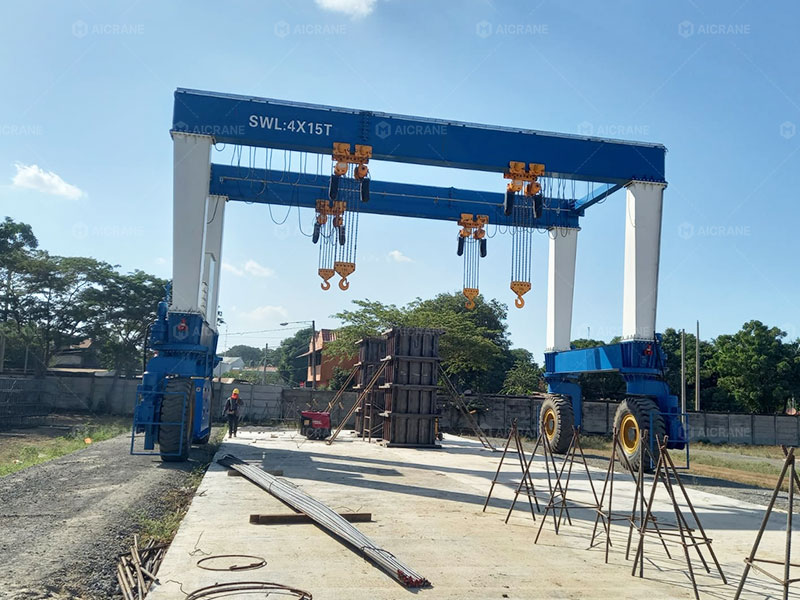
1. Cycle Velocity Index (CVI)
CVI measures the raw mechanical efficiency of the crane’s primary movements. It calculates the time taken to complete a standardized “work triangle”: lifting a load, traversing the trolley to a set point, discharging, and returning.
-
Operational Standard: High-efficiency units target hoisting speeds of 25–30 m/min (loaded) and trolley speeds of 70+ m/min.
-
Significance: It distinguishes between a crane’s theoretical design speed and its actual output in a live yard environment.
2. Precision Landing Accuracy
This metric tracks the deviation (in millimeters) from the target landing coordinates during a load drop.
-
Technical Requirement: Modern systems utilizing absolute encoders and laser-based positioning must maintain an accuracy of ±5mm.
-
Efficiency Impact: High precision eliminates “inching”—the slow, manual micro-adjustments made by operators—which can shave 4–6 seconds off every move.
3. Specific Energy Consumption (SEC)
SEC quantifies the energy required (kWh or liters of fuel) per ton-meter of work performed.
-
Key Indicator: The effectiveness of the Energy Regeneration System. High-efficiency RTGs capture potential energy during load lowering and convert it back into usable power.
-
Benchmark: Regenerative models should demonstrate a 30% to 50% reduction in SEC compared to traditional friction-braking models.
4. Gantry Deviation & Auto-Steering Reliability
Unlike rail mounted gantry cranes, RTGs are prone to “crabbing” or skewing. This metric measures the percentage of travel distance requiring manual steering correction.
-
The Metric: Meters of deviation per 100 meters of travel.
-
Goal: Utilizing DGPS or magnetic transponder induction, a high-efficiency crane should achieve a near-zero manual intervention rate for straight-line travel.
5. Mean Time Between Failures (MTBF)
MTBF is the primary indicator of mechanical and electrical reliability. It measures the average uptime between faults that cause operational stoppage.
-
Target: A world-class RTG should exceed 600 operational hours between failures.
-
Focus Areas: MTBF tracking should specifically isolate the hoist gearbox, spreader/hook twist-locks, and inverter drive units.
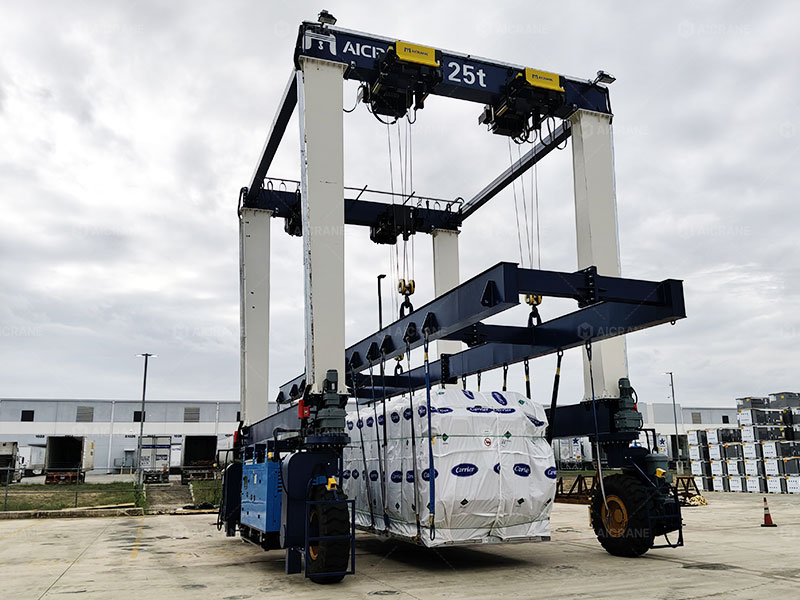
6. Anti-Sway Attenuation Time
Load oscillation is a major safety risk and a massive time sink. This metric measures the seconds required for a load to settle to a stationary state after the trolley stops.
-
Performance Standard: Electronic anti-sway systems should reduce sway to under 0.5 degrees in less than 1.5 seconds.
-
Value: Instantaneous stabilization allows for “fly-in” landings, significantly increasing moves per hour.
7. Net-to-Gross Weight Ratio
This engineering metric evaluates the structural efficiency of the crane by comparing its deadweight to its Safe Working Load (SWL).
-
Objective: Lowering the ratio through high-tensile steel construction.
-
Impact: A lighter crane reduces ground bearing pressure and tire rolling resistance, leading to lower maintenance costs on both the equipment and the yard surface.
8. Attachment Changeover Lead Time
For yards handling diverse cargo (wind blades, steel coils, or precast sections), the speed of switching between a spreader, C-hook, or specialized clamp is vital.
-
Metric: Total time from disconnecting one attachment to the full functional test of the next.
-
Benchmark: High-efficiency mobile gantry cranes equipped with Universal Quick-Connect interfaces should complete this in under 15 minutes.
9. Idle Time Power Draw
This measures the energy consumed while the crane is active but not performing a lift (waiting for trucks or instructions).
-
Optimization: High-efficiency units utilize “Auto-Stop” or “Sleep” modes for engines and peripheral systems (like cabin HVAC and floodlights).
-
Goal: Reducing idle fuel burn/power draw by 20% through smart power management logic.
10. Predictive Maintenance Accuracy
This metric assesses the effectiveness of the crane’s onboard diagnostic system. It compares the number of predicted failures versus actual unpredicted breakdowns.
-
Metric: (Predicted Failures / Total Failures) x 100.
-
Digital Integration: High-efficiency RTGs use vibration and temperature sensors on the main hoist and gantry drives to move toward 90%+ predictive accuracy, ensuring repairs happen before a stoppage occurs.
Comparative Analysis: Drive System Efficiency
crane
The choice of drive system fundamentally dictates the ceiling for these performance metrics.
| Metric | Diesel-Direct | Hybrid (Genset + Battery) | E-RTG (Cable Reel/Busbar) |
| Instant Torque Availability | Moderate | High | Maximum |
| Energy Recovery (Regen) | Low/None | High | Maximum |
| Maintenance Intensity | High | Moderate | Low |
| Direct Operating Cost | Highest | Moderate | Lowest |
Technical Strategies for Improvement
To move these metrics into the high-efficiency zone, three technical implementations are required:
-
VFD (Variable Frequency Drive) Optimization: Ensure VFD parameters are tuned to the specific inertia of the load types being handled. This prevents “overshoot” in trolley travel and reduces mechanical stress.
-
CAN bus Integration: All subsystems (hoist, gantry, steering, and sensors) must communicate via a high-speed CAN bus to reduce signal latency, which is essential for achieving the ±5mm landing accuracy.
-
Active Surface Monitoring: Real-time monitoring of tire pressure and temperature. Since RTG gantry cranes rely on rubber-to-ground contact, maintaining optimal tire health is the simplest way to improve Gantry Deviation and Energy Consumption metrics.
Conclusion
High-efficiency RTG performance is not the result of a single feature but the synergy of mechanical precision, energy recovery, and data-driven maintenance. By focusing on these ten metrics, yard operators can shift from reactive troubleshooting to a proactive, optimized workflow that maximizes throughput while minimizing the total cost of ownership.