When purchasing a gantry crane for industrial lifting tasks, one of the most critical factors buyers must understand is the relationship between gantry crane capacity and load weight. While many buyers focus primarily on the maximum weight they intend to lift, crane capacity involves much more than simply matching the crane rating to the load weight. Factors such as safety margins, lifting accessories, load distribution, and operating conditions all influence the effective lifting capability of the crane.
For industries such as steel fabrication, precast concrete production, shipyards, railway logistics, and heavy manufacturing, selecting the correct gantry crane capacity is essential for ensuring safe operation, high efficiency, and long-term equipment reliability. Understanding the difference between rated capacity and actual lifting conditions can help buyers avoid costly mistakes and ensure their crane performs as expected.
This article explains what gantry crane capacity means, how it differs from load weight, and the key considerations buyers should evaluate before choosing a crane.
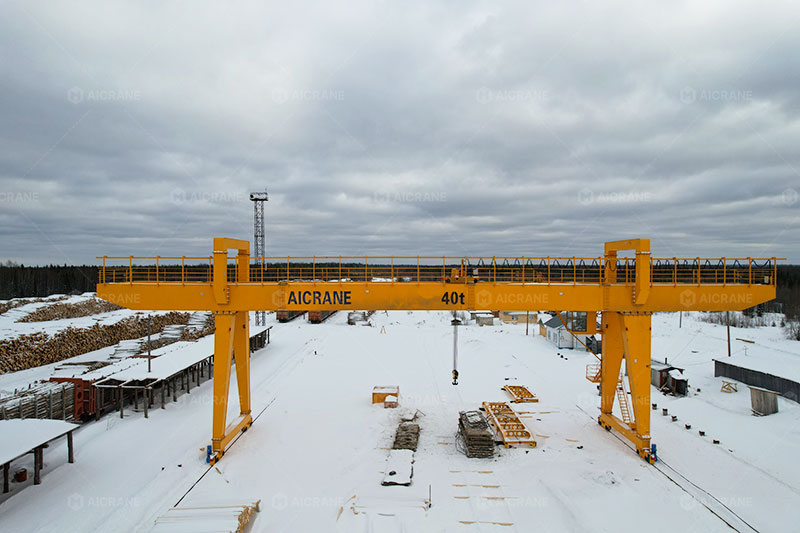
Understanding Gantry Crane Capacity
Gantry crane capacity refers to the maximum load that the crane is designed to safely lift under specified operating conditions. This capacity is determined during the engineering and manufacturing stages and is based on structural strength, hoisting system capability, and safety standards.
For example, a gantry crane may be rated as:
- 10 ton gantry crane
- 20 ton gantry crane
- 50 ton gantry crane
- 100 ton gantry crane
- 200 ton or higher heavy-duty gantry crane
The capacity rating typically represents the maximum safe load that can be lifted by the hoisting mechanism, excluding additional dynamic forces or operational variations.
However, buyers should understand that the rated capacity does not always represent the total effective weight involved in the lifting operation.
What Is Load Weight?
Load weight refers to the actual weight of the object being lifted during crane operation. This includes the item itself, such as steel coils, concrete beams, machinery, or shipping containers.
In real-world applications, the total load weight is often higher than expected because it may include:
- The weight of lifting slings or chains
- Lifting beams or spreader bars
- Hooks and rigging equipment
- Special lifting fixtures
- Attachments used for safe handling
For example, if a steel component weighs 18 tons and the lifting beam and rigging equipment weigh 2 tons, the total load weight becomes 20 tons. In this situation, a 20 ton gantry crane would already be operating at its maximum rated capacity, leaving little safety margin.
Why Capacity Should Always Exceed Load Weight
One of the most important principles in crane selection is that the gantry crane capacity should always be higher than the expected load weight. This additional margin ensures safe lifting operations and protects the crane structure and mechanical components.
Several reasons explain why a capacity buffer is necessary.
Safety Margin
Engineering standards typically incorporate safety factors to ensure cranes can withstand unexpected stresses. However, operating a crane continuously near its maximum capacity can increase structural fatigue and reduce equipment lifespan.
A safety margin allows the crane to operate more reliably under varying conditions.
Dynamic Forces During Lifting
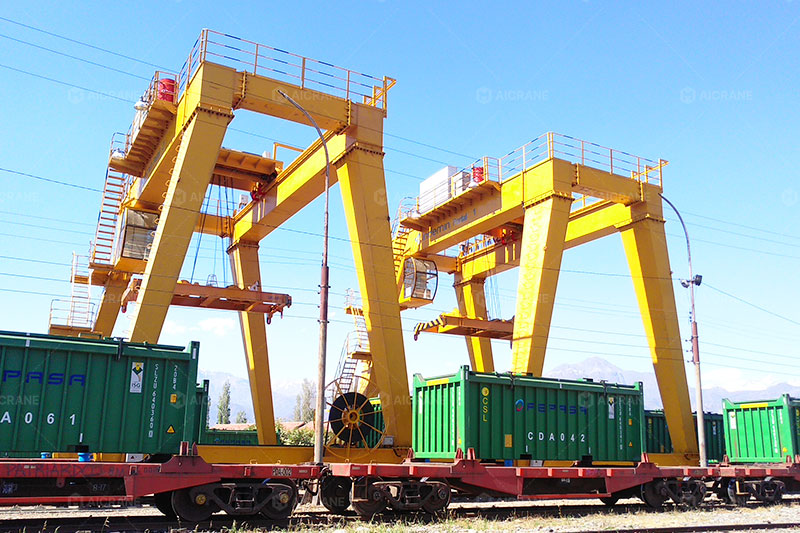
When a crane lifts or moves a load, dynamic forces are created. These forces occur due to:
- Acceleration and deceleration during lifting
- Load swinging
- Trolley movement
- Sudden stops or direction changes
These dynamic effects can temporarily increase the load experienced by the crane beyond the static load weight.
Uneven Load Distribution
In some applications, loads are not evenly balanced. For example, precast concrete beams or steel structures may have an uneven center of gravity, causing additional stress on certain crane components.
Selecting a crane with higher capacity ensures the structure can handle these variations.
The Role of Lifting Accessories in Total Load Weight
Many buyers overlook the impact of rigging and lifting accessories on total load weight. However, these components can add significant weight to the lifting operation.
Common lifting accessories include:
- Wire rope slings
- Chain slings
- Lifting beams
- Spreader bars
- Magnetic lifting devices
- Vacuum lifting equipment
For heavy lifting applications, lifting beams alone can weigh several tons. Therefore, buyers must include these accessories when calculating the total load.
For example:
| Component | Weight |
|---|---|
| Steel beam | 45 tons |
| Lifting beam | 3 tons |
| Slings and rigging | 2 tons |
| Total load | 50 tons |
In this case, selecting a 50-ton gantry crane would be risky, since the crane would be operating at its maximum limit. A 60-ton or higher capacity double girder gantry crane would provide a safer solution.
Environmental and Operational Factors
Load weight calculations should also consider environmental and operational conditions, particularly for outdoor gantry cranes.
Wind Loads
Outdoor cranes, such as rail mounted gantry cranes (RMG) or rubber tyred gantry cranes (RTG), may be affected by wind forces. Strong winds can increase load instability and impose additional stress on the crane structure.
Temperature Effects
Extreme temperatures can affect material properties and mechanical performance, potentially influencing lifting capacity under certain conditions.
Travel and Movement
When gantry cranes move while carrying loads, the wheels, structure, and girders experience additional forces. The crane must be designed to accommodate both lifting and traveling loads.
These factors highlight why simply matching crane capacity to load weight is insufficient.
Typical Capacity Ranges for Gantry Cranes
Gantry cranes are available in a wide range of capacities to suit different industries and applications.
Common capacity ranges include:
Light-duty gantry cranes
- 1 ton to 15 tons
- Used in workshops, warehouses, and maintenance facilities
Medium-duty gantry cranes
- 20 tons to 50 tons
- Common in steel fabrication plants, logistics yards, and construction sites
Heavy-duty gantry cranes
- 50 tons to 500 tons or more
- Used in shipyards, bridge construction, power plants, and large manufacturing facilities
For example, some industrial gantry cranes supplied for infrastructure projects may have capacities of 200 tons, 300 tons, or even higher, depending on the size of the components being handled.
When Two Gantry Cranes Are Used Together
In some applications, buyers choose to use two gantry cranes for synchronized lifting. This approach allows operators to lift extremely large or long loads, such as bridge beams or oversized machinery.
For instance, two 70-ton gantry cranes working together can theoretically lift a 140-ton load. However, perfect load distribution is rarely achieved in practice, so engineers typically apply additional safety margins.
This configuration requires advanced synchronization systems and experienced operators to ensure safe operation.
Tips for Buyers Choosing the Right Capacity
To avoid underestimating crane capacity requirements, buyers should follow several practical guidelines.
Calculate the Full Load Weight
Always include the weight of:
- The object being lifted
- Rigging equipment
- Lifting beams and attachments
Consider Future Expansion
Many industrial facilities expand production capacity over time. Selecting a slightly higher capacity crane can help accommodate future lifting requirements without replacing the equipment.
Evaluate Application Scenarios
Different industries have unique lifting needs. For example:
- Precast plants lift heavy concrete beams
- Steel mills handle dense steel coils
- Shipyards lift large marine components
Understanding the specific application ensures the crane capacity is suitable.
Consult Crane Manufacturers
Experienced crane manufacturers can analyze load characteristics, working conditions, and safety requirements to recommend the optimal gantry crane capacity.
Conclusion
Understanding the relationship between gantry crane capacity and load weight is essential for buyers seeking safe and efficient lifting solutions. While load weight represents the mass of the object being lifted, crane capacity reflects the maximum safe lifting capability of the equipment under specified conditions.
Selecting a crane based solely on load weight can lead to operational risks, equipment damage, and safety hazards. Buyers must also consider rigging equipment, dynamic forces, environmental conditions, and safety margins when determining the appropriate crane capacity.
By carefully evaluating these factors and working with experienced manufacturers, businesses can choose gantry cranes that deliver reliable performance, long service life, and safe lifting operations across a wide range of industrial applications.